Be yourself; Everyone else is already taken.
— Oscar Wilde.
This is the first post on my new blog. I’m just getting this new blog going, so stay tuned for more. Subscribe below to get notified when I post new updates.
Be yourself; Everyone else is already taken.
— Oscar Wilde.
This is the first post on my new blog. I’m just getting this new blog going, so stay tuned for more. Subscribe below to get notified when I post new updates.
Many people get the words weather and climate confused. According to Robertson (2017) climate is “the long-term trends in these atmospheric conditions meas-ured over decades, centuries, or longer” (p. 67).
Robertson, M. (2017). Sustainability Principles and Practice. Routledge.
The problem that we face is huge because aside from climate change being an issue currently, many governments worldwide are not recognizing the problem therefore they are not doing enough to prevent climate change or at least lower the speed as which it is changing.
Scientists state that “temperatures are rising more than twice as fast over land as over the oceans. They are rising faster in the Northern Hemisphere, where most of Earth’s land area is, than in the Southern Hemisphere” (Robertson, 2017, p. 68).
Robertson, M. (2017). Sustainability Principles and Practice. Routledge.
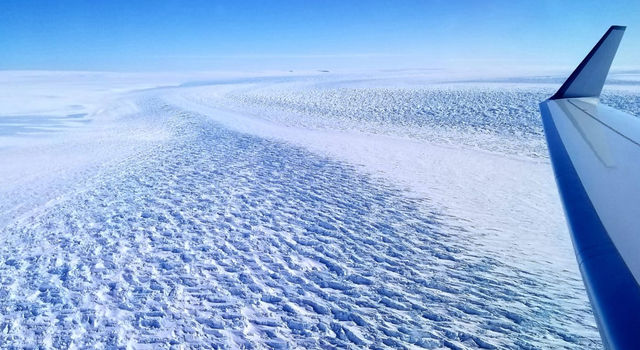
According to an article on NASA’s website, a scientist named Virginia Brancato stated that a glacier in Antarctica named Denman that is melting at a fast rate is caused by “the shape of the ground beneath Denman’s western side, there is potential for the intrusion of warm water, which would cause rapid and irreversible retreat, and contribute to global sea level rise in the future”.
As the world becomes more dependent on what is cheaper, faster and newer we have lost interest on taking care of our environment.
Robertson (2017) mention that “the steps in the waste hierarchy familiar to most nonprofessionals are reduce, reuse, and recycle, sometimes referred to as the 3Rs” (p. 275).
According to the “Story of Stuff” video, advertisements in the United States are contributors to people buying new things even if people don’t need them to have a good life. Sellers are trying to make people “not fit” in society so that they just keep on buying the latest product. This is an example of not abiding by the 3Rs.
Robertson, M. (2017). Sustainability Principles and Practice. Routledge.
4.5 pounds of trash is generated by each American in our country everyday. Landfills and incineration are toxic and harmful for our environments creating environmental problems such as climate change.

“There is no seasons in the supermarket, Tomatoes are grown all year round” (Kenner, 2008).
“Tyson, Swift, Cargill, SmithField or the big four control 80% of the meat market “Kenner, 2008)

The UN FAO says that “food security exists when all people, at all times, have physical and economic access to sufficient, safe and nutritious food to meet their dietary needs and food preferences for an active and healthy life”

Almost all of the food for humans comes either from agriculture or from harvesting animals from the oceans.
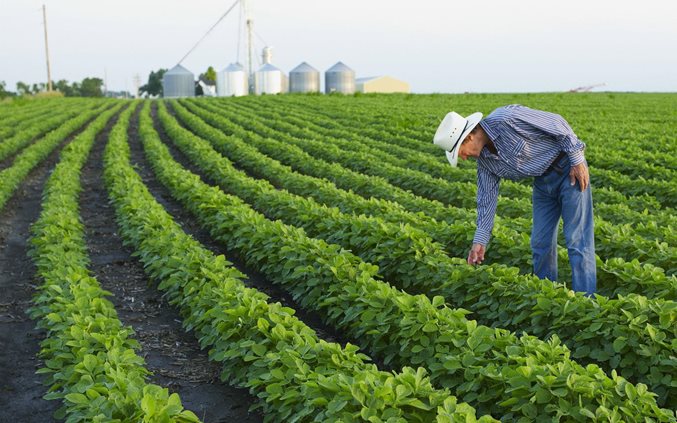
Due to the green evolution, new methods increased the production of food making harmful effects to humans due to the increased chemicals used in the food process.

Robertson, M. (2017). Sustainability Principles and Practice. Routledge.
Although many of the general population may think that pollution is throwing trash outside negligently, there is much more to it.

Robertson (2017) states that “Pollution comes from a variety of sources. It can be from a natural source such as a volcanic eruption, or it can be from an organic source such as sewage, a naturally occurring byproduct of life, which becomes pollution when it accumulates at rates greater than natural processes can accommodate” (p. 133).
Robertson, M. (2017). Sustainability Principles and Practice. Routledge.
Pollution can be in any form both physically and in other forms such as gases. There are a number of pollutants that harm our environment and humans. These toxins can cause for shortage of life, and even birth defects before a newborn is born. The EPA has improved the protection of the United States citizens from pollutants and toxins that may harm us. Certain pollutants such as emissions of vehicles are now restricted and strictly enforced by placing certain standards on them.

Polybrominated Diphenyl Ethers or PBDE is used as flame retardants in a wide variety of products, including plastics, furniture, upholstery, electrical equipment, electronic devices, textiles and other household products according to the EPA. This chemical is said to cause neurotoxicity, developmental neurotoxicity, reproductive toxicity, thyroid toxicity, immunotoxicity, liver toxicity, pancreas effects (diabetes) and cancer. In addition, it acts as an endocrine system disruptor. Some regulations for this product include a minimal risk level (MRL) of 0.006 milligrams per cubic meter for intermediate duration inhalation exposure, meaning that manufactures can only use a small amount of the chemical to manufacture certain products. In some states it is prohibited to use PBDE. We are exposed to PBDE everyday, it is present in most furnisher products and in most plastics.

As we all know, the planet Earth is composed of approximately more than 70% of water. Therefore, it is vital for us to preserve our oceans and the freshwater resources that are available for us to consume and survive everyday. Like our planet, our bodies are also dependent of water.
In the text, Robertson (2017) states that “The problem is not that Earth is running out of water; the problem is that humans pull it from the hydrologic cycle faster than it can be purified and replaced, and that human activities pollute some of the remaining water so that it is not safe to use (p. 90).
Robertson, M. (2017). Sustainability Principles and Practice. Routledge.
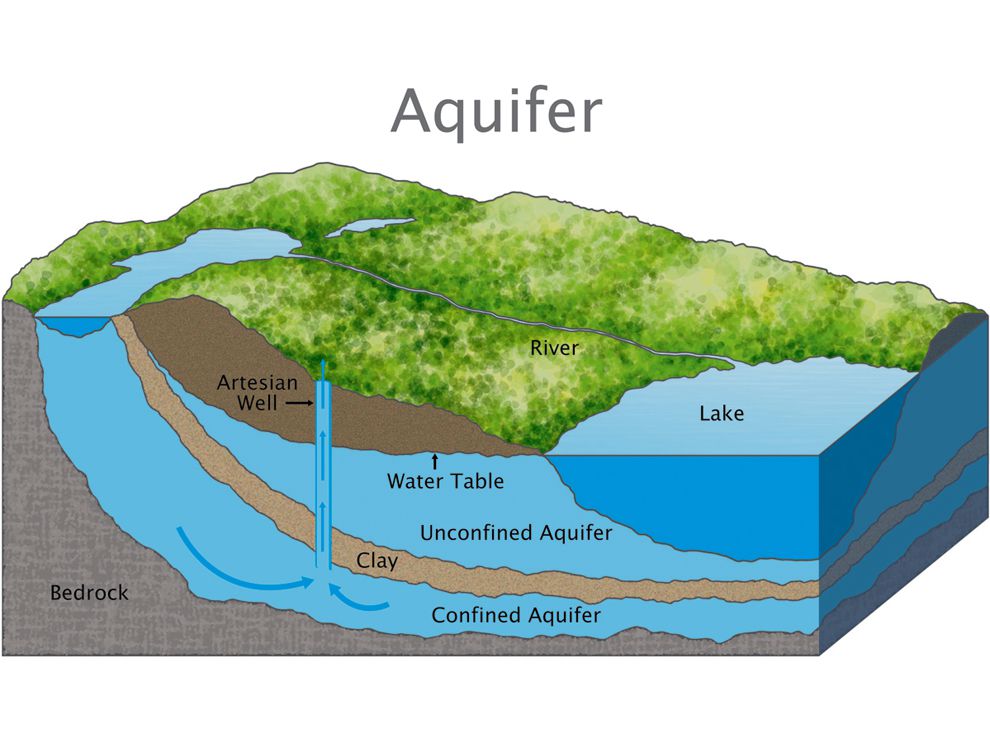
Aquifers are considered to be some of the most important sources of water that is available for us to consume. Twenty percent of the water we consume comes right out of aquifers. Thanks to this invention, aquifers serve an important role in agriculture. Robertson (2017) mentioned that “The world’s largest known aquifer, the Ogallala Aquifer, has helped to turn the US Great Plains into one of the world’s most productive agricultural regions (p. 92).
Robertson, M. (2017). Sustainability Principles and Practice. Routledge.
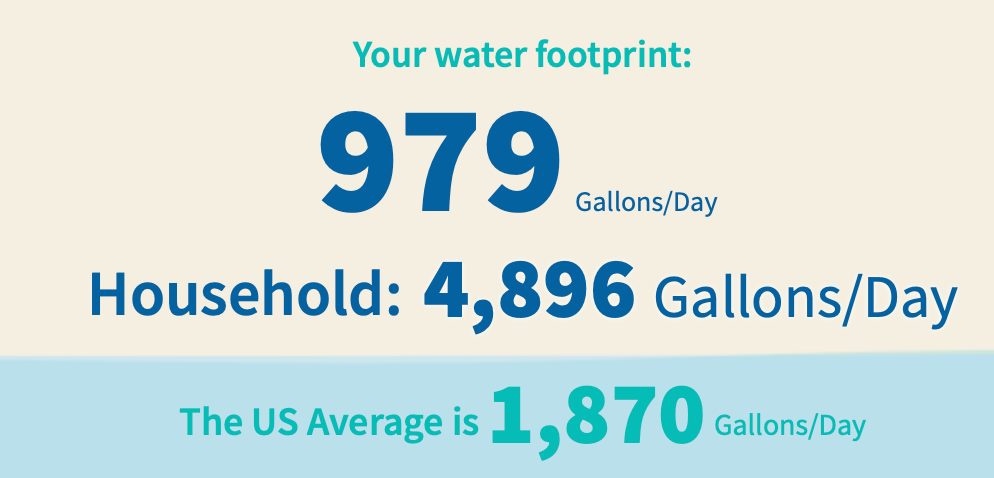
After taking my water foot print test, I discovered that I fall bellow the US average which made me feel good. However, I noticed that I consume too much water during my showers, and that I should be more considerate whenever I shower. In addition, I was surprised to see that the national average for the toilet category was 14 gal/day.
Biophilia suggests that humans possess an innate tendency to seek connections with nature and other forms of life. Therefore, we should promote for the youth to have more time in nature or at least outside in a playground.

When I was growing up, in Elementary school we would be allowed to have recess. Now in days, recess has been removed from the majority of the schools nationwide. Children need a time to connect with nature at least once a day. Unfortunately, children spend more time behind a tv screen or inside the air conditioning than out in nature.
As Louv (2008) states “parents notice significant changes in their child’s stress levels and hyperactivity when they spend time outside” (p. 4).
Louv, R. (2008). Last child in the woods: saving our children from nature-deficit disorder. Chapel Hill, NC: Algonquin Books of Chapel Hill.
Stress relief in children and helping with disorders such as ADHD are benefits for children to be connected with nature and green spaces, as Louv describes it.
Food and water are what make us get our energy and nutrients that help in sustaining life. Without agriculture, animals, vegetables, fruits, and other things, we would not have enough to survive.

Agriculture is the science of cultivating plants and animals as food crops. Currently agriculture occupies about 35 percent of the Earth’s land surface (Robertson, 2017, p. 224).

Robertson, M. (2017). Sustainability Principles and Practice. Abingdon, Oxon: Routledge.
As the population of the world grows, it has gotten harder to predict if enough food resources will be available in the future. The green revolution of the 1960s and 1970s helped to produce food at higher rates to feed the growing populations.
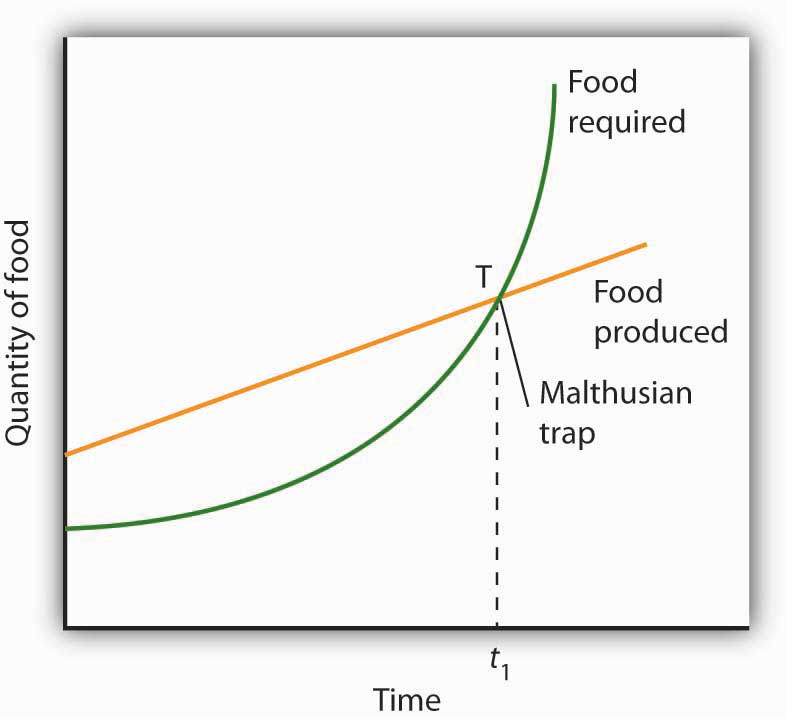
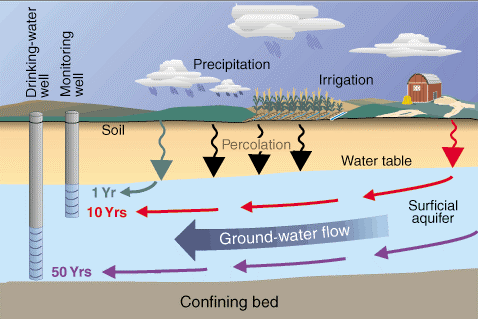
The creation of advanced technology usage to create food at a larger scale has also been a burden to our waterways. This is because “runoff from pesticide applications and from factory-farm sewage introduces pollution in the form of chemicals, antibiotics, and pathogens to lakes and rivers” (Robertson, 2017, p. 232). 70 percent of the world’s water is used for irrigation, if the pollutants from the pesticides gets into our waterways then this can create a greater problem to sustaining live both in water and on land.
Robertson, M. (2017). Sustainability Principles and Practice. Abingdon, Oxon: Routledge.
The biosphere includes all the living and nonliving parts, the organisms and the rocks, water, and air with which they interact as materials are interchanged in the biogeochemical cycles.
Robertson, M. (2017). Sustainability Principles and Practice. Abingdon, Oxon: Routledge.

Within the Biosphere we are all connected one way or another. Therefore, as humans all of our actions have consequences on everything else that surrounds us. For example, pollution caused by us either through littering or through emissions, affect the sea creatures and other ecosystems. Health conditions and birth defects are consequences of the pollutants that we release into the atmosphere.
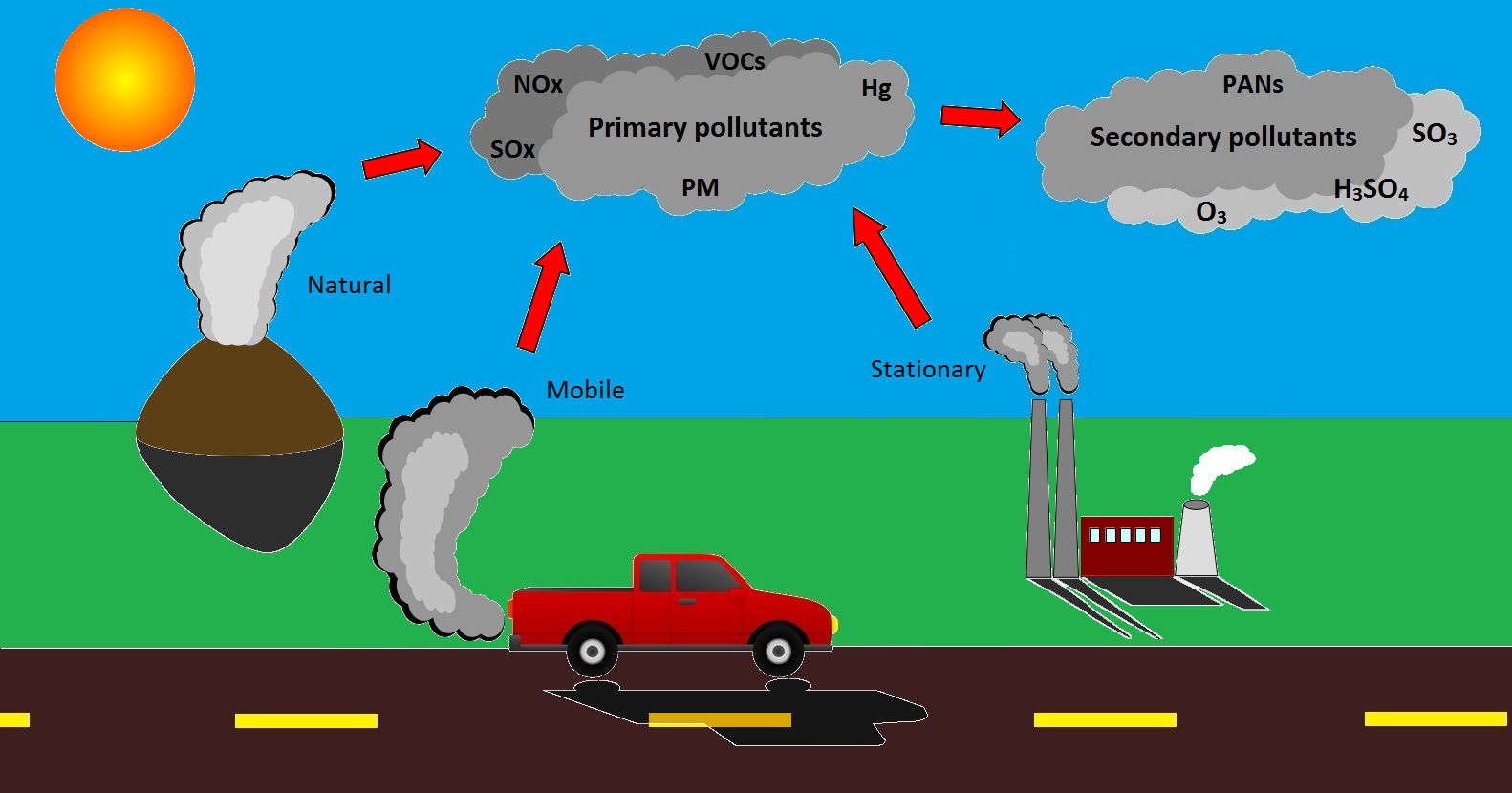
As described by Robertson (2017), “The Human Sphere Sustainability is built on three interdependent pillars: environment, economics, and equity, guided by good governance. The multidimensional issues of poverty, health, overpopulation, resource depletion, food and water scarcity, political instability, and the destruction of the biosphere are all connected” (p. 44).
Robertson, M. (2017). Sustainability Principles and Practice. Abingdon, Oxon: Routledge.
The three pillars should be followed globally in order to build a sustainable future. Without following these pillars our multidimensional issues will continue to increase and new ones will arise.

My Ecological Footprint
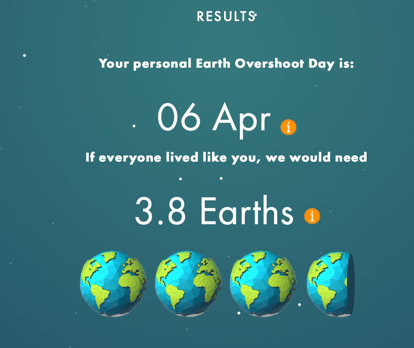
Unfortunately, I was absolutely surprised by my results. This was an eye-opener, to be honest, I wasn’t aware that my lifestyle caused so much harm to our environment.
I can find addition ways to conserve energy, eat in a more sustainable manner and to recycle more than I currently do.
I do think that these options to reduce my ecological footprint are feasible and I think after a few months if I were to retake the test I would have a lower ecological footprint.
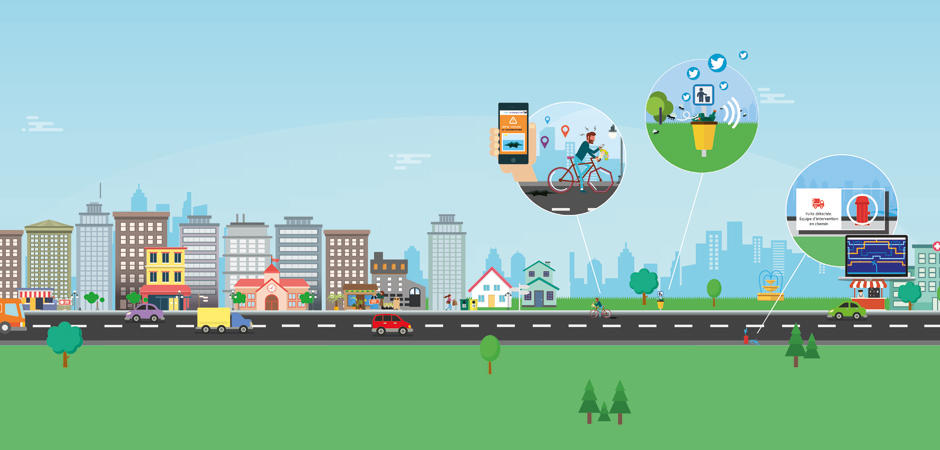
As our population continues to grow to unimaginable numbers, we need to have “livable cities”. As Robertson (2017) states, “These converging trends point to an enormous opportunity to plan, design, build, and operate new or regenerated cities in ways that are different and better than before. Design and planning on an urban and regional scale have an even greater impact on sustainability than the design of individual buildings” (p. 208).
Robertson, M. (2017). Sustainability Principles and Practice. Abingdon, Oxon: Routledge.
In order to construct a more sustainable future we ought to plan better how to reduce the problem of sprawling. Unfortunately, as of now the financial gain is considered a priority, the future of the planet is not as valuable to most constructors. Southwest Florida is among the fastest growing regions in the United States, however, I feel that they are not planning adequately before constructing the new sites. Robertson (2017) defines planning as “a profession that deals with creating places and communities that are healthy, efficient, attractive, and equitable for present and future generations” (p. 209).
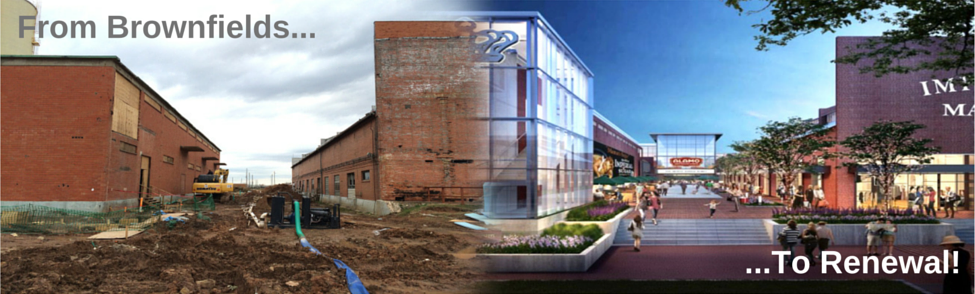
Sprawling is a huge and common problem in our era. This is because new developments are made in areas that are considered greenfields. Brownfield developments is a better way to reconstruct areas that are old and need remodeling rather than tearing down forests and fertile soil grounds that can be used for agriculture instead. There are alternatives that planning professionals should consider before making sprawling become an issue.

Robertson, M. (2017). Sustainability Principles and Practice. Abingdon, Oxon: Routledge.
Working as an agent for change should be something that all young generations should have in mind. However, being an agent for change is not an easy task. Robertson (2017) mentions that in order to be an agent for change one must have an “understanding of environmental, economic, and social systems and their interconnectedness and the ability to think at multiple scales in the face of very big issues” (p. 330).

Robertson, M. (2017). Sustainability Principles and Practice. Abingdon, Oxon: Routledge.
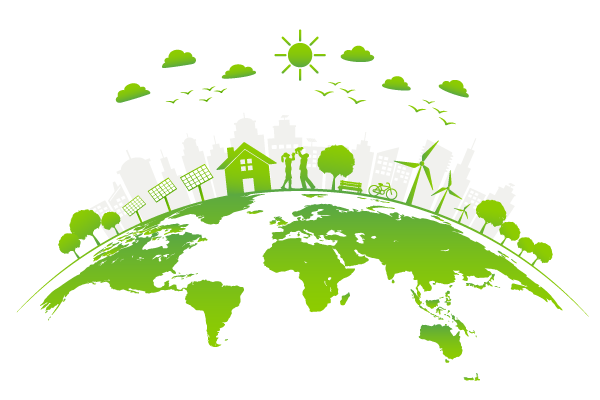
Robertson (2017) defines sustainability as “enduring into the long-term future; it refers to systems and processes that are able to operate and persist on their own over long periods of time (p. 3). In other words, as the population grows throughout the globe, we must come up with ways of sustainable development in order to preserve natural resources while continuing to grow. I see this as a balance between sustainability and growth.
Robertson, M. (2017). Sustainability Principles and Practice. Abingdon, Oxon: Routledge.
As Keith Arnold stated during the Colloquium Video, Florida Gulf Coast University wanted to be a university that focused on the environment. Keith mentioned that, “FGCU should have an environmental component and a focus of growth management, a focus on environmental quality issues that would help define and distinguish it from the other universities in the state of Florida”.

As we all know, change and population growth is inevitable, however, we must construct the future in a responsible manner without impacting our ecosystems and the future of the generations coming forward. One of the concepts that Robertson (2017) writes about is resilience. “Sustainability and resilience are not synonymous but are interrelated concepts. They provide complementary frameworks that are employed toward the same goal: to enable social-ecological systems to continue into the long-term future” (Robertson, 2017, p. 4).

Robertson, M. (2017). Sustainability Principles and Practice. Abingdon, Oxon: Routledge.
After the first Earth Day celebration in 1970, the Clean Air Act, the Clean Water Act, and the Endangered Species Act became the law of the land (Jackson, Nunes-Zaller, Salmond and Thomas, 2018, p. 1)

Jackson, S.B., Nunes-Zaller., A, Salmond, J., and Thomas, B. (2018). A Sustainable Future: Equality, Ecology and Economy. Dubuque: Kendall Hunt.
One of the major challenges for sustainability to prosper at a global scale is that education is not feasible for everyone due to high poverty levels. Another challenge that deters sustainability in certain parts of the world is equality. Inequality is most often seen to affect women, especially for cultural reasons. If inequality exists then a sustainable environment will not exist. As Jackson, Nunes-Zeller, Salmond, and Thomas (2018) mentioned “A stable and sustainable society will respect equality in all of its forms, supporting community members and ensuring equal treatment and representation. If a society fails to rectify inequalities it is establishing the basis for future and enduring conflict” (p. 3). Lastly, a struggling economy can be detrimental to achieving sustainability. If a country, state, or city is unable to invest in social sustainability then there will not be any advancements in having sustainable progress. In contrast, that will lead to the destruction of the environment.

References
Arnold, K. (2013, January 11). Colloquium Video. Retrieved from https://www.youtube.com/watch?v=s3HD1X_Y25w.
Jackson, S.B., Nunes-Zaller., A, Salmond, J., and Thomas, B. (2018). A Sustainable Future: Equality, Ecology and Economy. Dubuque: Kendall Hunt.
Robertson, M. (2017). Sustainability Principles and Practice. Abingdon, Oxon: Routledge.

 What Is Sustainability?